
The service
Development of growth models for the striped venus clam (Chamelea gallina) in the Adriatic Sea - ended
The service was commissioned by the Department of Comparative Biomedicine and Food Science (BCA) of the University of Padua, with the aim of investigating the growth dynamics of the striped venus clam (Chamelea gallina) along the Adriatic coast.
The primary focus of the consultancy was to determine whether the environmental variations recorded over the last decade have influenced the growth rates of these bivalves. Particular attention was paid to comparing the two main fishing areas: the Veneto and the Marche regions. This activity addressed the need for rigorous scientific tools for the sustainable management of fishery resources and for understanding the impact of climate change—such as rising water temperatures—on the productivity of natural beds.
Bluefarm's role
Bluefarm provided its expertise in bioenergetics and satellite data analysis to develop a customized modeling framework:
-
Development of the bioenergetic model (SfG): We implemented a Scope for Growth (SfG) model capable of simulating the individual energy balance of the clam, translating environmental variables (food availability and temperature) into somatic tissue and shell growth.
-
Copernicus environmental data analysis: We extracted and processed decadal time series (2010-2023) from the Copernicus Marine Service portal, analyzing critical parameters such as Sea Surface Temperature (SST), chlorophyll-a concentration, and turbidity, identifying specific thermal and trophic trends for each area.
-
Validation and Calibration: The model was calibrated using experimental growth data provided by the Client, derived from marking and recapture activities. This allowed us to verify the accuracy of the simulations against real growth observed in the field.
-
Statistical Analysis and Growth Indicators: Using clustering techniques (K-means), we grouped years based on similar environmental conditions and defined a growth index (LT24) correlated with historical landing data. This approach highlighted how different local conditions (e.g., benthic solar irradiance and microalgae) influence the commercial size of the bivalves.
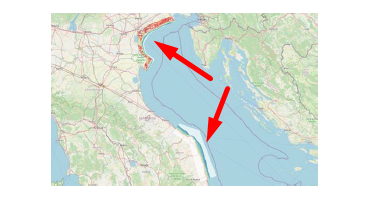
Study areas of the service
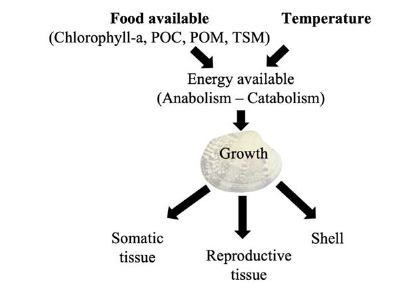
Schematization of the bioenergetic model used in this study
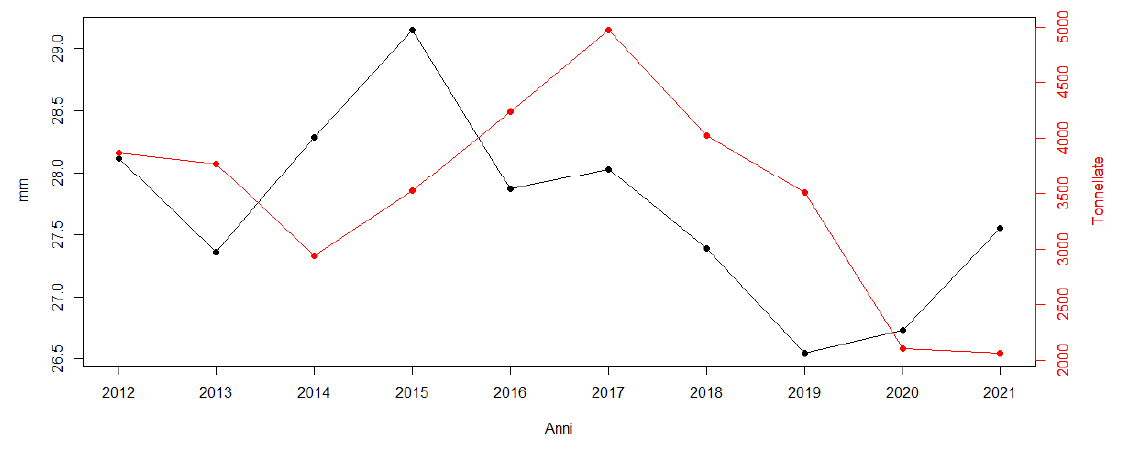
Comparison between the historical series of the response index of the LT24 bioenergy model and the total landed area taken from the Veneto fishing area (CoGeVo Veneto data)