

The service
ITACA – Innovative Tools to Increase the Competitiveness and Sustainability of Small Pelagic Fisheries – ended
The ITACA project, funded by the EU Interreg V-A Italy-Croatia 2014-2020 Programme under the Blue Innovation priority axis, promoted the competitiveness of Italian and Croatian fishing enterprises in the Adriatic, focusing on small pelagic fisheries — anchovy (Engraulis encrasicolus) and sardine (Sardina pilchardus) — which represent a significant share of income for the Adriatic fishing sector.
Small pelagic fisheries are historically affected by fluctuations in fish stock availability, leading to price instability and difficulties in business planning. ITACA's main objective was to provide Producer Organisations (POs) in the North Adriatic area with innovative tools to plan fishing activities sustainably, matching fishing effort with market dynamics and resource availability. The project developed and tested these tools across 7 Italian and Croatian pilot regions before promoting their large-scale adoption. The project ran from 1 January 2019 to 30 June 2022, with a total budget of €1,744,467, of which €1,480,797 from the European Regional Development Fund (ERDF) and €261,670 from national co-financing.
Bluefarm's role
Bluefarm participated in the ITACA project as a subcontractor of Veneto Agricoltura (Veneto Region's Agency for Innovation in the Primary Sector), Lead Partner of the project.
Bluefarm's contribution focused on the development of an integrated bio-econometric model for the sustainable management of small pelagic fisheries in the Adriatic Sea. The model consists of two distinct and complementary modules:
1. Econometric module
Bluefarm developed a module for short-term (1-day ahead) and medium-term (1-month ahead) forecasting of wholesale prices for anchovy and sardine at the main Italian and Croatian fish markets. The module is based on SARIMAX procedures (Seasonal AutoRegressive Integrated Moving Average with eXogenous regressors), selected for their ability to capture seasonal, weekly and calendar effects on price dynamics — typical features of small pelagic fish markets. The model was calibrated on daily and monthly datasets from the main Italian Adriatic markets, including Chioggia, Porto Garibaldi, Cesenatico, Ancona and San Benedetto del Tronto.
2. Bio-ecological module
The second module provides 1-month ahead forecasts of the average growth (length and weight) of both species in the main Adriatic fishing grounds, through an individual bioenergetic model calibrated on water temperature and trophic availability data. The module also produces weekly cumulative estimates of total catches, to be compared with the Total Allowable Catch (TAC) as a constraint for fishing effort planning throughout the fishing season.
The two modules are integrated: the output of the bio-ecological module (average fish size) feeds into the econometric module as an explanatory variable, since fish size directly influences the wholesale price.
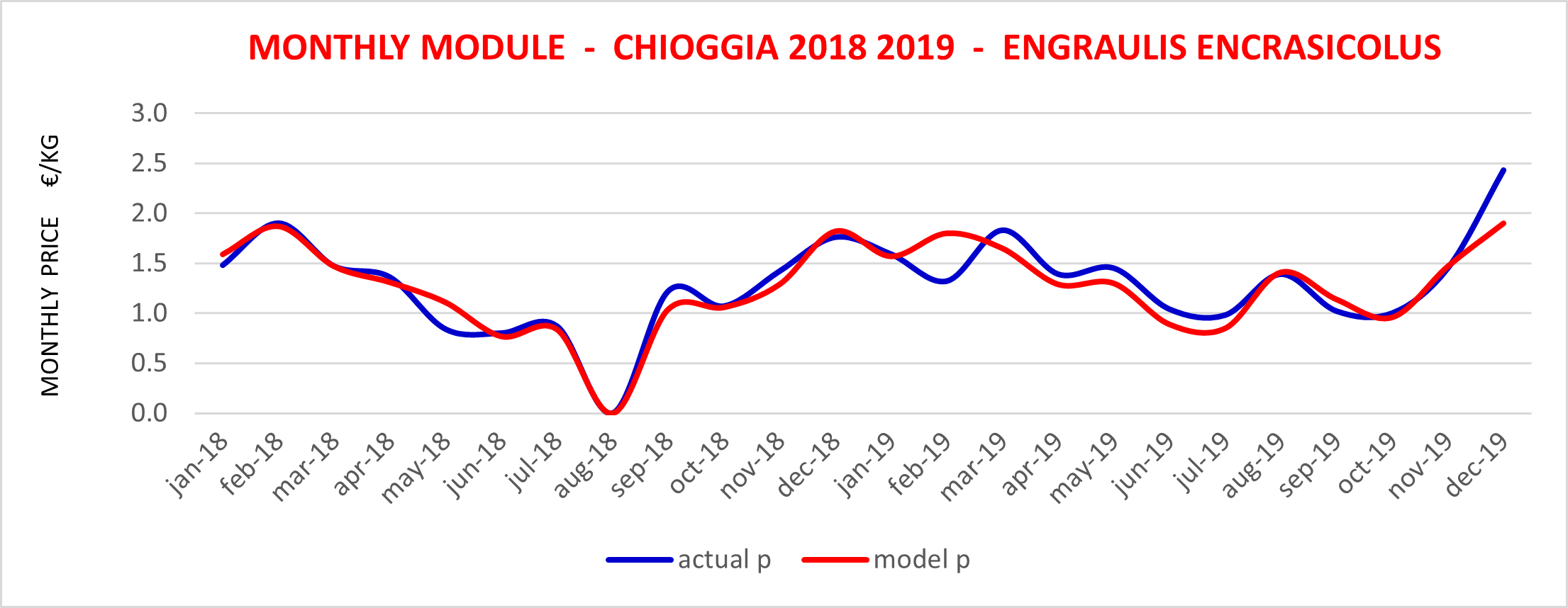
Predicted and observed average monthly price for the Chioggia marketplace in 2018-2019
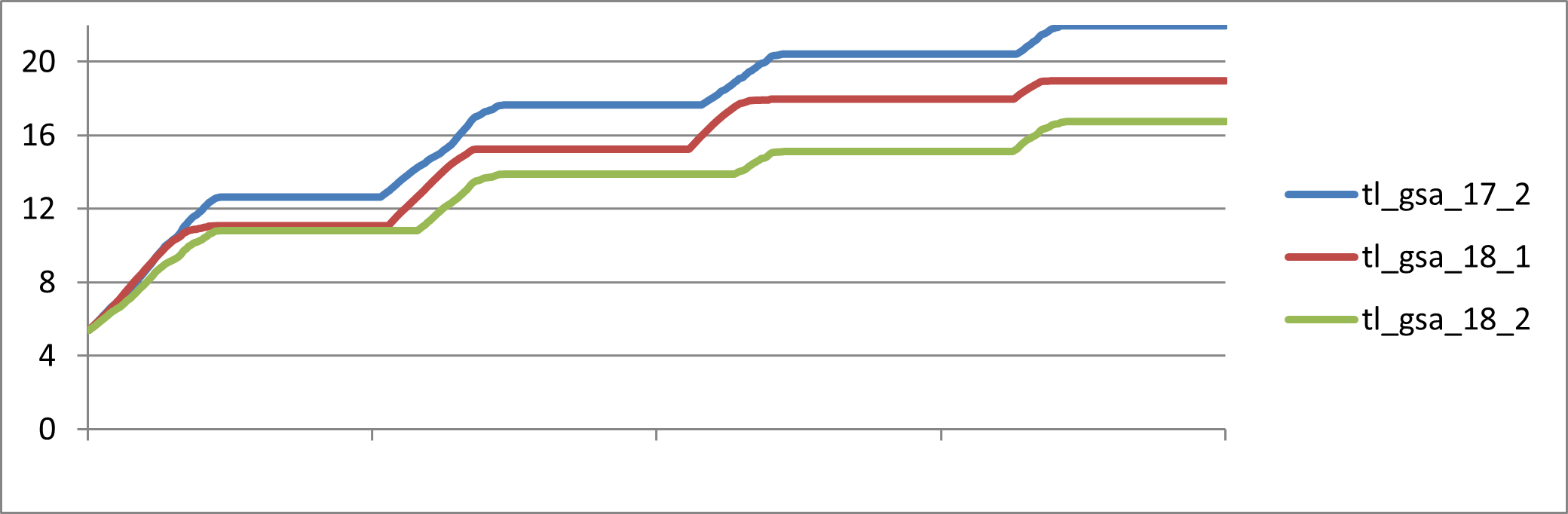
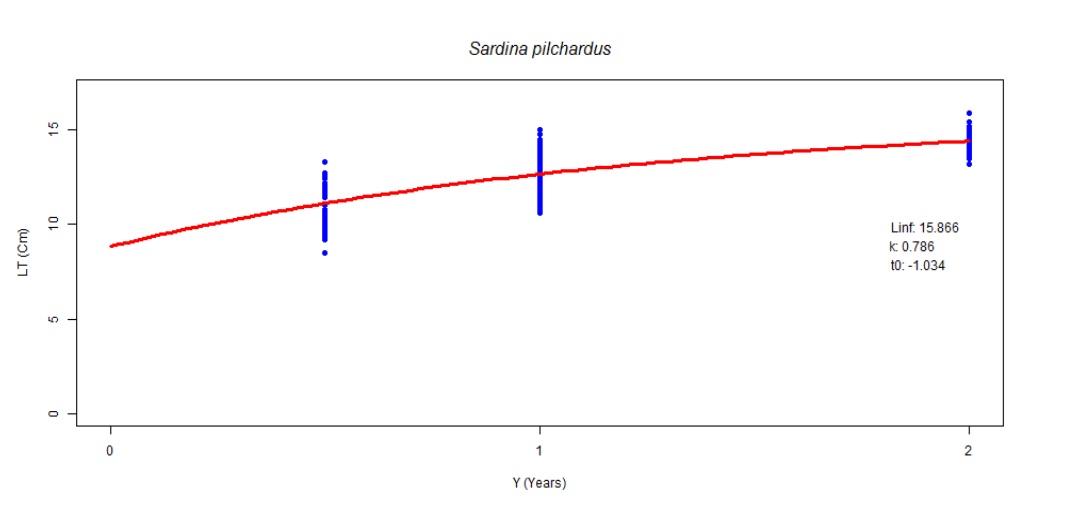
Comparison between model results and VBGC presented in MEDIAS 2016 for GSA18: the upper figure shows the model output, starting from the juvenile stage. The average asymptotic length after 3 years for the simulation concerning GSA18, about 16.2 cm, compares well with the VBGC curve based on observations (since t0 = -1, fish age is approximately t+1 in the lower figure).
For more information, visit the official project page.